4 Published BooksWakefield Master
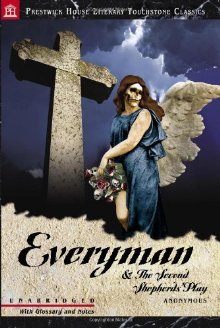
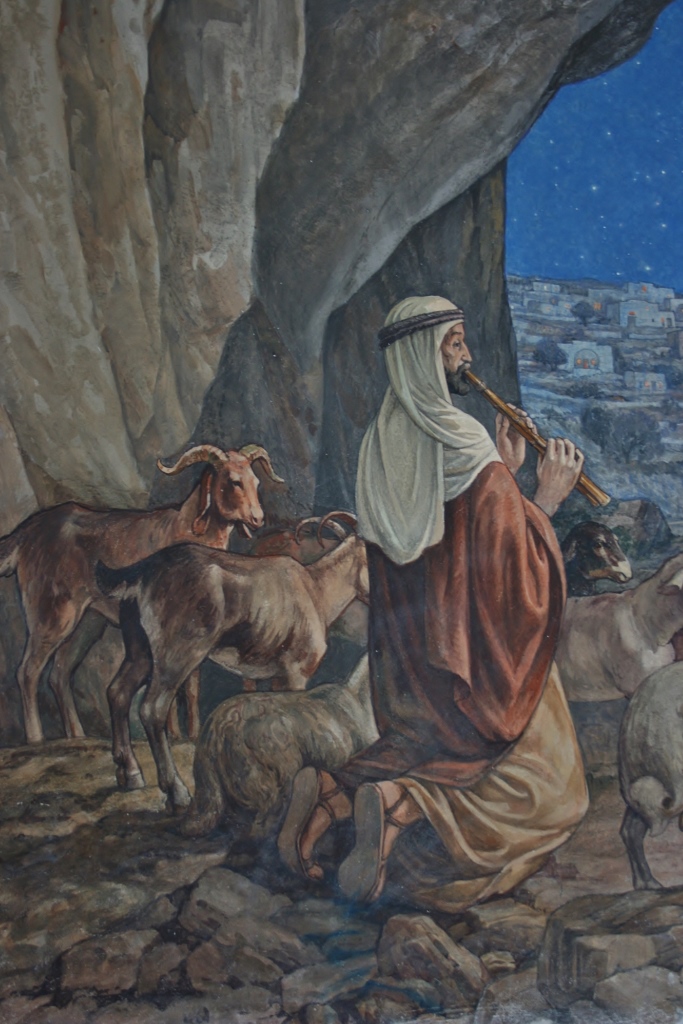
The Wakefield Mystery Play cycle is the work of many authors, some sourced from the York Cycle. However, the most significant contribution has been attributed to an anonymous author known as the "Wakefield Master." It is believed that his additions include Noah, The First Shepherds' Play, The Second Shepherds' Play, Herod the Great and The Buffeting of Christ. This common authorship is suspected due to a unique thirteen-line rhymed stanza, which is evident in all five texts.
The term "Wakefield Master" emerged from a need to distinguish some material in the Towneley manuscript from a mass of unexceptional material, and was first coined by Charles Mills Gayley. In 1903, Gayley and Alwin Thaler published an anthology of criticism and dramatic selections entitled Representative English Comedies. It had long been believed that the Towneley Play was a mediocre work that showed extensive borrowing from other sources but containing vibrant and exciting material, apparently by one author, who was responsible for four or five complete pageants and extensive revisions. Gayley refers to this person as the "master" (with a lowercase m) in the book. Then in a 1907 article, Gayley emended this to "The Wakefield Master," the name which is still frequently used.
Within the Broadview Anthology of Medieval Drama, Christina M. Fitzgerald and John T. Sebastian find it important to note, "the quotation marks placed around the name 'Wakefield Master' are thus to be taken to indicate that the ascription of authorship is the product of convention, rather than proven fact. All that can be said with confidence is that there seems clearly to have been a common force involved in the shaping of all five of these plays"
[Source: Wikipedia]