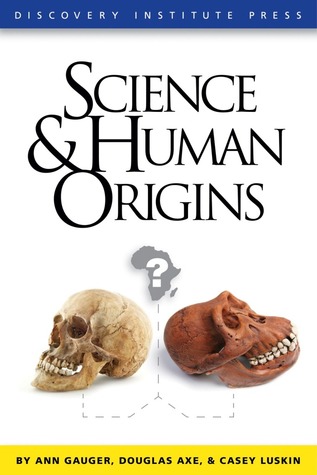
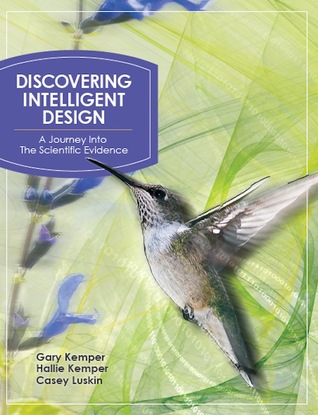
10 Published BooksCasey Luskin
Casey Luskin is an attorney with graduate degrees in both science and law. He earned his B.S. and M.S. in Earth Sciences from the University of California, San Diego. His Law Degree is from the University of San Diego. In his role at Discovery Institute, Mr. Luskin works as Program Officer in Public Policy and Legal Affairs, helping educators and policymakers nationwide to teach evolution accurately. He formerly conducted geological research at Scripps Institution for Oceanography (1997-2002).
Luskin is also co-founder of the Intelligent Design and Evolution Awareness (IDEA) Center, a non-profit helping students to investigate evolution by starting "IDEA Clubs" on college and high school campuses across the country. For his work with IDEA, the Intelligent Design and Undergraduate Research Center named an award honoring college graduates for excellence in student advocacy of intelligent design (ID) the "Casey Luskin Graduate Award."
With diverse interests, Mr. Luskin has published in both technical law and science journals, including Montana Law Review; Geochemistry, Geophysics, and Geosystems; Hamline Law Review; Liberty University Law Review; University of St. Thomas Journal of Law & Public Policy; and Progress in Complexity, Information, and Design. He contributed to the volumes Intelligent Design 101: Leading Experts Explain the Key Issues. Luskin is also co-author of Traipsing Into Evolution: Intelligent Design and the Kitzmiller v. Dover Decision, a comprehensive and concise critique of Judge John E. Jones' ruling in the first trial to assess the constitutionality of teaching ID in public schools.
A senior editor at Salvo Magazine, Luskin has also published in a variety of print and online popular media such as Research News and Opportunities in Science and Theology; Human Events; U.S. News & World Report, Touchstone Magazine; the Tampa Tribune; the San Diego Union Tribune; the Washington D.C. Examiner, and the Philadelphia Inquirer. He has also discussed the debate over evolution in numerous sources, including the journals Nature and Science, the New York Times, the Los Angeles Times, NPR, CNN.com, USA Today, and Foxnews.
Casey has spoken at numerous conferences and events on intelligent design, including having debated leading ID-critics at Scripps Institution for Oceanography; the Commonwealth Club in San Francisco; Western Washington University; and the University of Maryland's Knight Center for Specialized Journalism. His special interests include geology, science education, biological origins, and environmental protection. He also has a lifelong love for sailing, kayaking, hiking, and the outdoors.