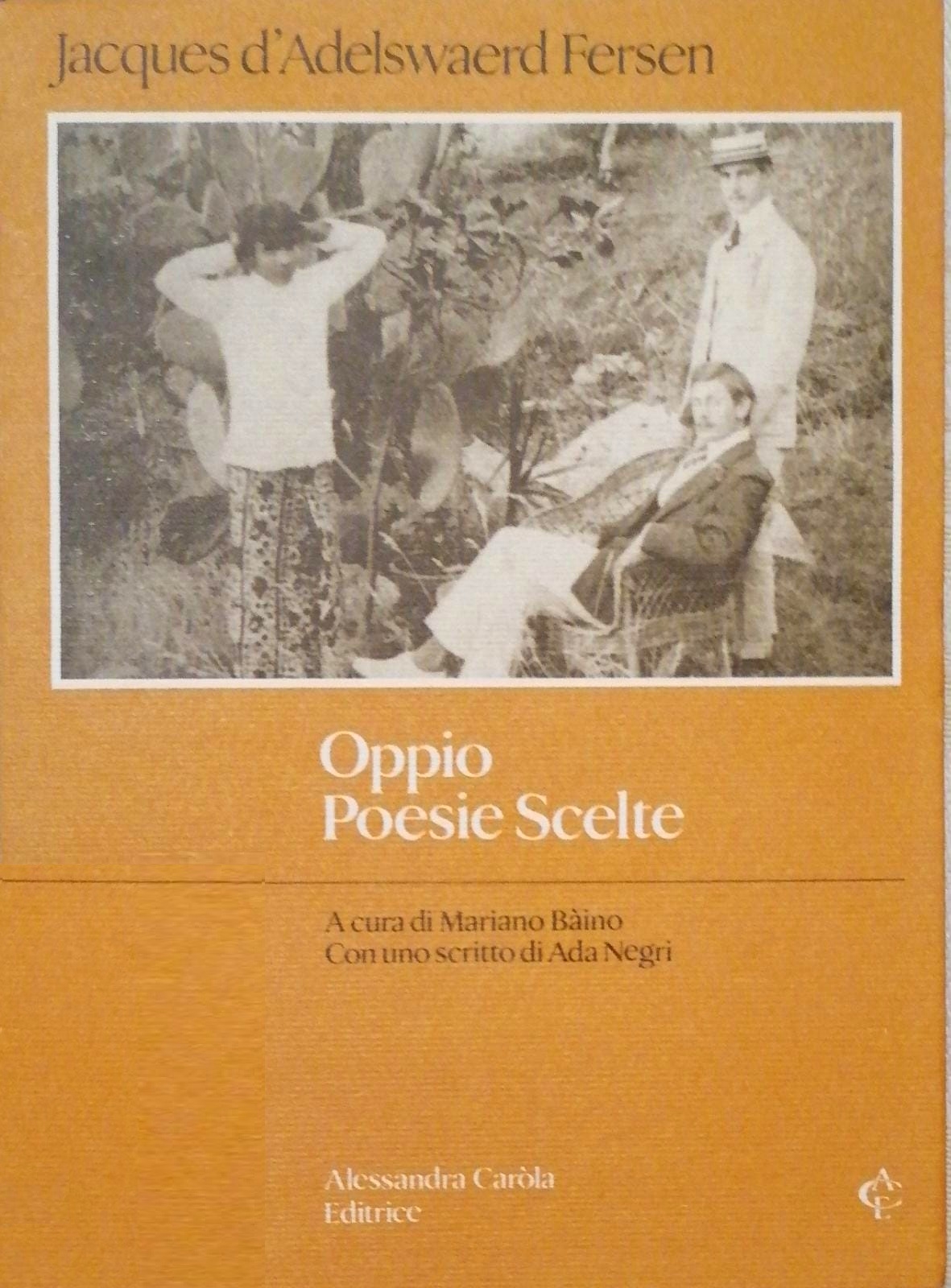
17 Published BooksJacques d'Adelswärd-Fersen
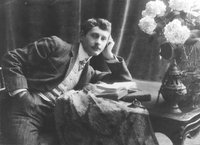
Baron Jacques d'Adelswärd-Fersen (20 February 1880 – 5 November 1923) was a French novelist and poet. His life forms the basis of a fictionalised biography by Roger Peyrefitte, L'Exilé de Capri.
In 1903 a scandal involving school pupils made him persona non grata in the salons of Paris, and dashed his marriage plans; after which he took up residence in Capri with his long-time lover, Nino Cesarini. He became a "character" on the island in the inter-war years, featuring in novels by Compton MacKenzie and others. His house, Villa Fersen, remains one of Capri's tourist attractions.
After his marriage plans were foiled, d'Adelswärd-Fersen remembered the island of Capri from his youth, and decided to build a house there. The island had already attracted other homosexual or bisexual visitors, such as Christian Wilhelm Allers, Somerset Maugham, E. F. Benson, Alfred Bruce Douglas, Robert Baldwin Ross, Oscar Wilde, Marcel Proust, Ada Negri, Friedrich Krupp, Norman Douglas, and Compton and Faith Mackenzie; and attracted many others during Adelsward's stay. He bought land at the top of a hill in the northeast of the island, close to where the Roman emperor Tiberius had built his Villa Jovis two millennia earlier. His house, initially called Gloriette, was eventually christened Villa Lysis (later sometimes referred to as Villa Fersen) in reference to Plato's Socratic dialogue Lysis discussing friendship (or, according to modern notions, homosexual love).
Villa Lysis is a notable building. Its style is described by some as "Liberty" but is not Liberty or Art Nouveau in the French manner but may perhaps be described as "Neoclassical decadent". The large garden is connected to the villa by steps leading to an Ionic portico. In the atrium a marble stairway with wrought-iron balustrade leads to the first floor, where there are bedrooms with panoramic terraces, and a dining room. The ground-floor sitting-room, decorated with blue majolica and white ceramic, overlooks the Gulf of Naples. In the basement there is a 'Chinese Room', in which opium was smoked.
Jacques d'Adelswärd-Fersen spent the rest of his life based in Capri, and died there in 1923 —allegedly by suicide achieved through drinking a cocktail of champagne and cocaine. His ashes are conserved in the non-Catholic cemetery of Capri. His friend, Nino Cesarini, returned to Rome.