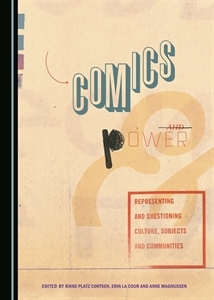
Comics and Power: Representing and Questioning Culture, Subjects and Communities
Many introductions to comics scholarship books begin with an anecdote recounting the author’s childhood experiences reading comics, thereby...
Also Available in:
- Amazon
- Audible
- Barnes & Noble
- AbeBooks
- Kobo
More Details
Many introductions to comics scholarship books begin with an anecdote recounting the author’s childhood experiences reading comics, thereby testifying to the power of comics to engage and impact youth, but comics and power are intertwined in a numbers of ways that go beyond concern for children’s reading habits. Comics and Power presents very different methods of studying the complex and diverse relationship between comics and power. Divided into three sections, its 14 chapters discuss how comics interact with, reproduce, and/or challenge existing power structures – from the comics medium and its institutions to discourses about art, subjectivity, identity, and communities. The contributors and their work, as such, represent a new generation of comics research that combines the study of comics as a unique art form with a focus on the ways in which comics – like any other medium – participate in shaping the societies of which they are part.
Contents:
"Introduction," Anne Magnussen, Erin La Cour and Rikke Platz Cortsen
Part I: Power and Institutionalization: Shifting Cultural and Medial Perceptions
1. "Comics: This Bitter Art," Øystein Sjåstad
2. “'You Wouldn’t Get It': 'Penny Arcade' as Gaming Communication
Hub and Webcomic," Andreas Gregersen
3. "An Artist, a Cowboy and Some Ontological Jokes: A Nordic Contribution to the Understanding of Comics in Art," Fred Andersson
4. "Between Media: David Mack’s Kabuki," Steen Christiansen
5. "'Shades of Conan Doyle! A lost wo
rld!' Fantasy and Intertextuality in Don Rosa’s 'Escape from Forbidden Valley',” Katja Kontturi
Part II: Power and the Subject: Exposing the Politics of Subjectivity and Identity
6. "Opening a 'Thirdspace': The Unmasking Effects of Comics," Rikke Platz Cortsen and Erin La Cour
7. "On Politics, Everyday Life, and Humor in Cecilia Torudd’s Comic Strip Ensamma mamman," Kristina Arnerud Mejhammar
8. "Comics Reenactment: Joe Sacco’s Footnotes in Gaza," Øyvind Vågnes
9. “'[A] matter of SAVED or LOST': Difference, Salvation, and Subjection in Chick Tracts," Martin Lund
Part III: Power and Society: Reproducing and/or Contesting National
Communities and Ideologies
10. "Fearing Religious Satire: Religious Censorship and Satirical Counter-Attacks," Dennis Meyhoff Brink
11. "Transnationalism in the Finnish 1950s Debate on Comics," Ralf Kauranen
12. "Comics in Postcolonial Senegal: Suggesting and Contesting National Identity," Margareta Wallin Wictorin
- Format:Hardcover
- Pages:355 pages
- Publication:2015
- Publisher:Cambridge Scholars
- Edition:Unabridged edition
- Language:eng
- ISBN10:1443870862
- ISBN13:9781443870863
- kindle Asin:1443870862
About Author